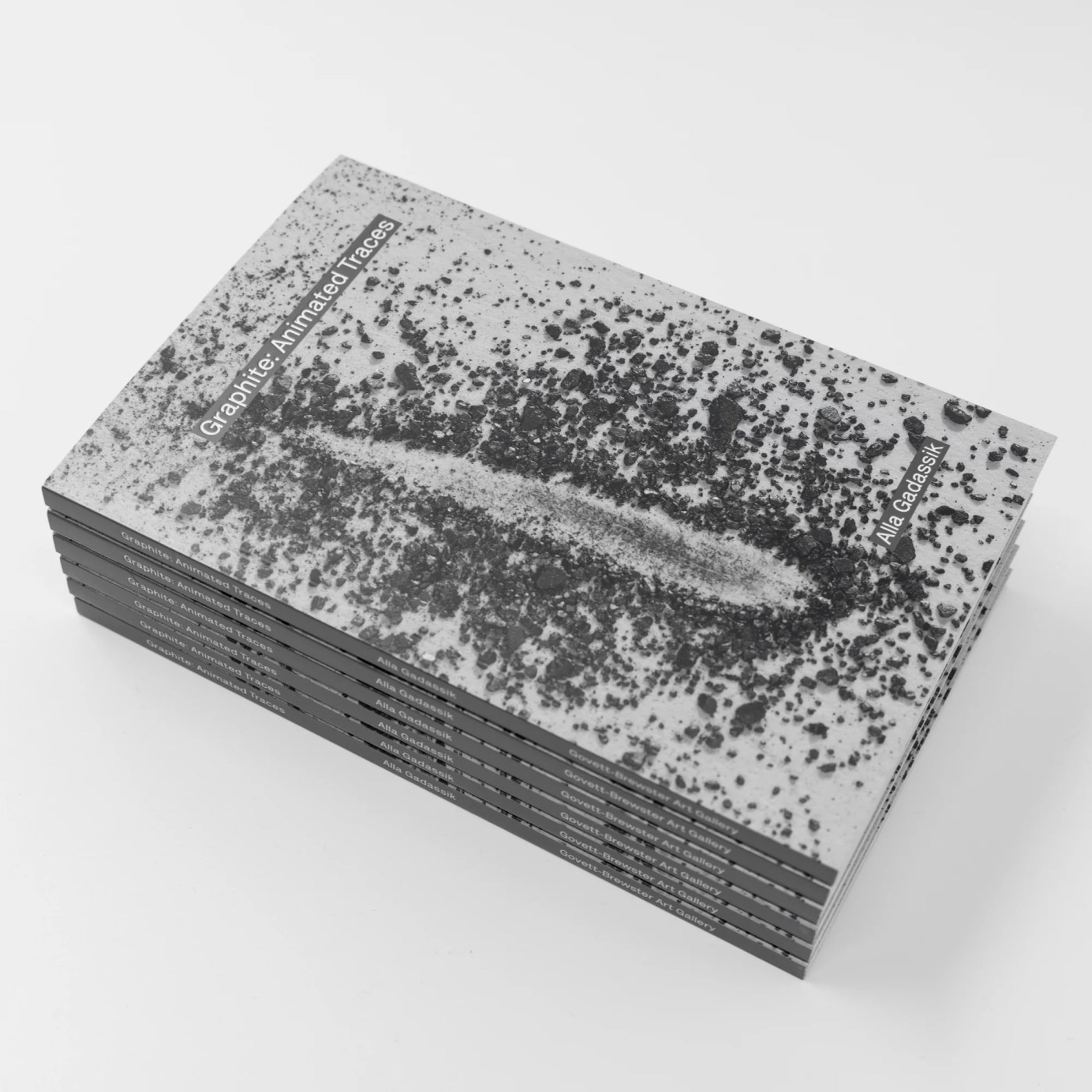
My short monograph Graphite: Animated Traces (Govett-Brewster Art Gallery, 2024) profiles the material and cultural history of graphite as a creative medium, with close attention to its important role in contemporary art and animation. The book highlights the medium’s temperament and significance by turning to the unfolding and provisional status of the drawn moving image, considering graphite as a medium of emergent thought, contemplation, tender intimacy and impermanence.
Continue reading “Book Publication – “Graphite: Animated Traces””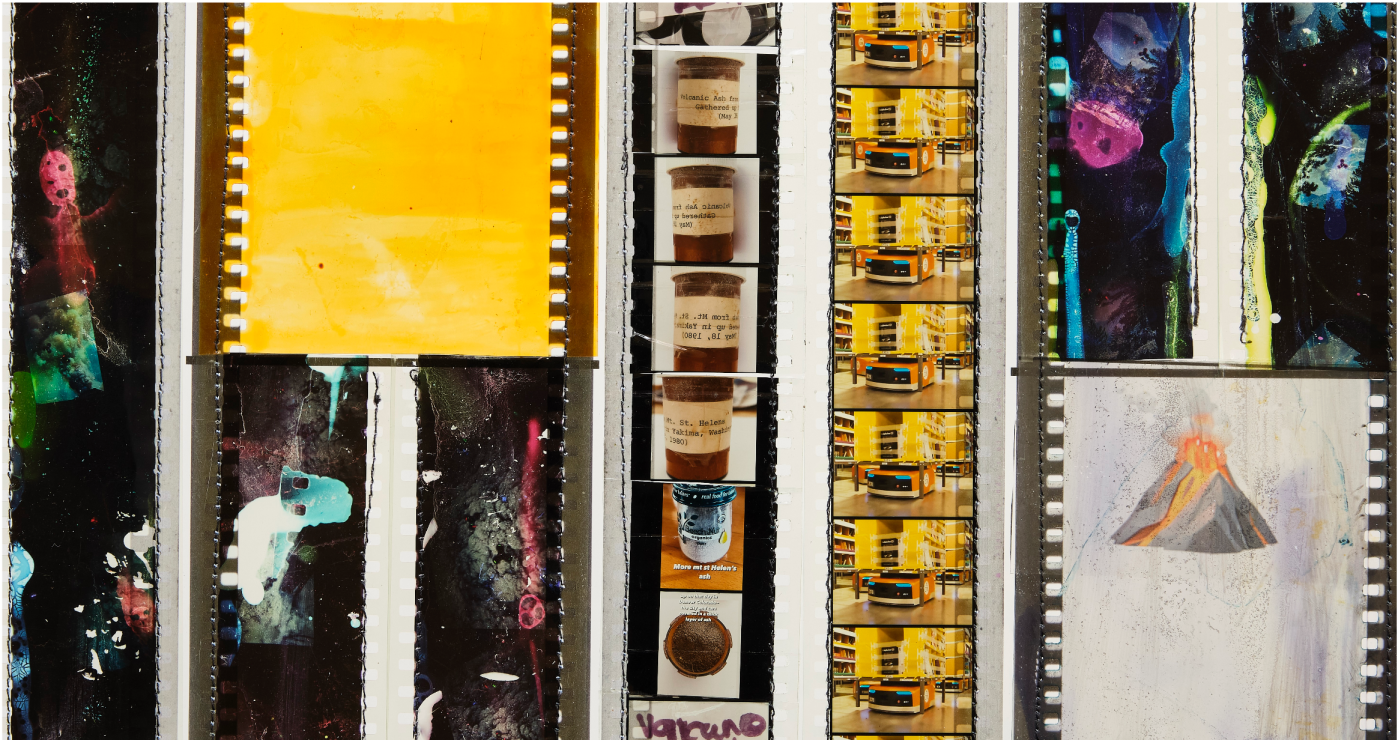
The culmination of my curatorial residency at the Govett-Brewster Art Gallery | Len Lye Centre, this is the first major exhibition dedicated to the reciprocal relationship between animation and textile art. Transforming the centre into a series of gallery and cinema spaces, Interlaced: Animation and Textiles brings together moving-image works fashioned from textile forms and materials alongside fibre works inspired by animation. Artists featured in the exhibition explore ways of embroidering with projected light, quilting celluloid films, and weaving digital tapestries.
ARTISTS:
Faig Ahmed (Azerbaijan), Danielle Brathwaite-Shirley (UK), Jon Michael Corbett (Canada), Kelly Egan (Canada), Sione Faletau (Aotearoa, Tonga), Footprints Studio (UK), Sabrina Gschwandtner (USA), Marguerite Harris (France), Len Lye (Aotearoa), Aubrey Longley-Cook (USA), Jodie Mack (USA), Huw Messie (USA), Lindsay McIntyre (Canada), Miracle de Mille (France), Ng’endo Mukii (USA), Kate Nartker (USA), Ishu Patel (Canada), Pathé Studio (UK), Izabella Pruska-Oldenhof (Canada), Harry Smith (USA), Caitlin Thompson (Canada), Vaimaila Urale (Aotearoa, Samoa), Jennifer West (USA), Jordan Wong (USA), Shaheer Zazai (Canada), Studio Zeitguised (Germany)

Excited to return to the 2024 Ottawa International Animation Festival with another curated programme of animated shorts, Threads and Fibres. Following last year’s enthusiastic reception of the programme dedicated to animating ink, this year’s screening turns to animating fabric. I’m eager to bring together animation artists, critics, fans, textile enthusiasts, and secret knitters! The event will be introduced with a short talk and followed by audience discussion. Grateful to festival’s artistic director Chris Robinson for supporting this project. Tickets are available here, and details on the film lineup are included in the post below.
Continue reading ““Threads and Fibres” Screening and Talk at OIAF 2024″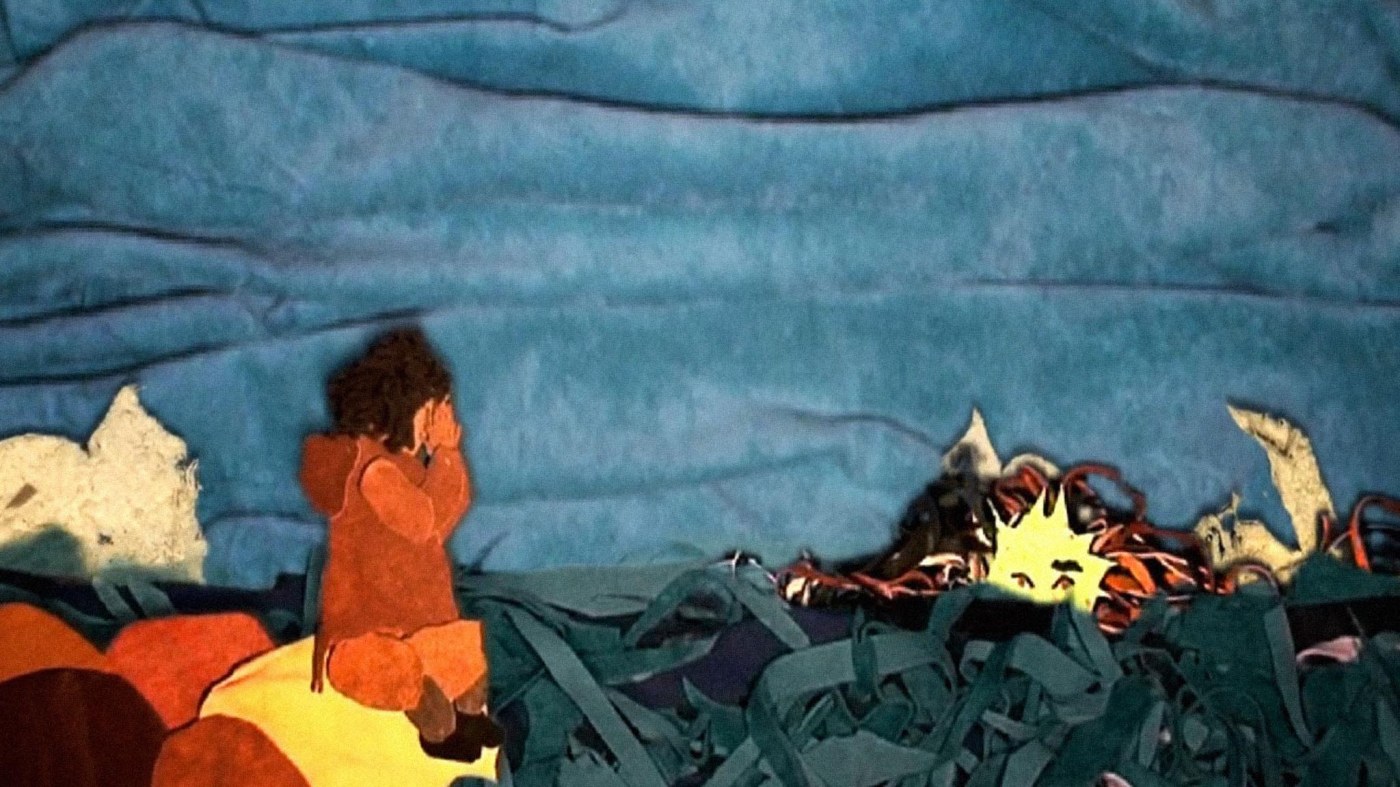
[Update: the position has been filled] Animate Materials Workshop is hiring a research assistant for a project on Indigenous storytelling for animation. Supported by interviews with contemporary animation producers, this project explores the possibilities and barriers of adapting oral stories for animation, with a focus on contemporary Inuit animation.
Continue reading “Hiring Student RA – Indigenous Storytelling in Animation”
This public talk (19-May-2024) introduces Maya Deren’s film Meshes of the Afternoon and Věra Chytilová’s film Daisies at VIFF, as a continuation of their popular Pantheon series dedicated to the Sight & Sound list of “greatest films of all time.” What do these two films have in common, other than being directed by women? I look forward to offering some framing remarks and hearing from audience members during the post-screening discussion. Screening time and tickets are available here.

My short article on the visual history of the floating horizon, from early depictions of aerial vision to the wonderful short film “The Case of the Spiral Staircase” (1982), was just published here in the online journal Animation 2.0. Happy to direct more attention to the Dutch filmmaking duo Jacques Verbeek and Karin Wiertz, many of whose films are accessible online courtesy of the EYE Filmmuseum.

How can researchers and artists develop meaningful ethical practices around storytelling methods? What responsibilities do researchers and creative practitioners have to participant stories they gather, store, and share? This virtual roundtable, presented by ECU’s Research Ethics Board, features speakers Aaron Nelson-Moody (Coast Salish art and design), Candace Brunette-Debassige (Indigenous education and academic policy), and Ranjan Datta (community-based disaster research). It was an honour to organize and facilitate this virtual roundtable as part of my work with the ECU Research Ethics Board.
Continue reading “Virtual Roundtable: Ethics of Storytelling”
This public talk (December-21-2023) opens the VIFF’s December 2023 series The Wonders, following a screening of Snow White and the Seven Dwarfs (1937, Walt Disney Studio). The talk discusses the pivotal role that Snow White played in the history of the Disney studio and theatrical feature-length animation more broadly. Just as the film’s titular dwarfs descended into the mines to source lustrous diamonds, hundreds of workers entered Walt Disney’s animation studio between 1934 and 1937 to produce and polish a new vision of spectacular, expensive animation.